Verde LLC - Products
Products
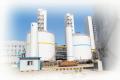
The Liquid Nitrogen, Oxygen, and Argon Plant Using Cryogenic Technology is a top of the line system. Our generator applications cover a range of production rates depending on the settings employed: Oxygen: 5~10,000L/H, Nitrogen: 5~10,000L/H, and Argon: 1~500L/H. The Cryogenic Engine features Fully Automatic G-M cold head with integral controls. It also includes high efficiency frequency drive with water cooling or optional air cooling. Fully automatic programmable logic controls (PLC) provide many features and modes including auto start, timed run, auto purge, etc. At the time of the order, an Optional Chiller can be attached to liquefier unit to allow continuous operation up to 45 C. The output purity of each gas generated from the plant are as follows: Nitrogen-99.9999% Oxygen -99.95% Argon -99.9999%
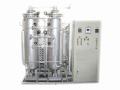
In this setup, compressed air is pumped through a compressor filter, along with polymer membrane filters. Due to variable solubility and proliferation factors, different gasses in the air penetrate the membrane at different rates, allowing for their separation. Based on their diffusion rates, the gases in the air are then placed into one of two categories: rapid gas or ¿¿slow gas. After being compacted and purified (to remove oil, water, and dust), the air will be passed through the membrane in order to create a separation of the gases. The â¿¿rapid gases,â¿ oxygen, carbon dioxide, and some vapors, will be the first to infiltrate the membrane wall, and exit through a discharge port via air pressure. Because nitrogen is characterized as a ¿¿slow gas, it will flow from the gas collector at the end of the pressure box, and finally enter a buffer tank where it will be stored.
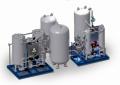
Using the principles of pressure swing adsorption, this gas generating plant is able to produce high purity nitrogen and oxygen gas from compressed air. This oxygen and nitrogen generation system uses pressure swing adsorption principles at normal temperatures, along with clean, compressed air as the raw material, and a carbon molecular sieve as the adsorbent. Due to differences in adsorption of oxygen and nitrogen onto the carbon molecular sieve surface as well as different diffusion rates through the open or closed program control valve, separation of the two gases is achieved, and nitrogen of a required purity is produced.
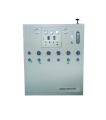
Using the principles of Pressure Swing Adsorption (PSA), this device is able to produce high quality hydrogen, and further refine it with a built in purification system. Pressure Swing Adsorption (PSA) is used to separate hydrogen gas from other gases by feeding the gas under a certain pressure. This separation process occurs in an adsorption tower and is advantageous in its low cost, low capacity, minimal maintenance requirements and user-friendly interface. The H2 Purifying System removes oxygen from hydrogen via a catalyst to obtain high purity H2 after adsorption and drying through the dust filter. The system can remove oxygen down to levels of 1ppm. Through one step of purification, the purity of the hydrogen generated can reach between 99.999~99.9999% and the dew point can be lower than -70°C; Through a second purification step, impurities can be lowered down to less than 0.1ppm and dew point can be lowered to -90°C
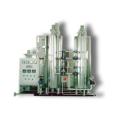
The Hydrogen Generating Plant by Ammonia Decomposition with Hydrogen Purifying System offers a variety of benefits. The system is low cost, has a long service life, simple operation, compact structure, small coverage, and simple installation. The system vaporizes liquid ammonia, and heats it with a catalyst until decomposition occurs, creating a mixture of gas consisting of 75% hydrogen and 25% nitrogen. Based on the principle that the molecular sieve adsorbs ammonia and water at different temperatures, high purity gas is produced via regenerating heat through the mixture working at normal temperature. Great for customers in the chemical industry with ammonia surplus, looking to produce high quality nitrogen and hydrogen.