For manufacturers operating across multiple locations, maintenance problems often start with fragmented processes rather than broken machines alone. This case shows how a structured Odoo rollout helped centralise maintenance, improve visibility, and reduce avoidable downtime.
Why maintenance systems often become a bottleneck
In manufacturing, equipment reliability depends not only on technical servicing but also on how maintenance work is recorded, scheduled, approved, and linked to spare-parts availability. When those steps are handled manually or inconsistently, even routine issues can lead to delays, incomplete data, and repeated breakdowns.
That was the context described in a case study published by XRA, an Odoo partner in South Africa. The company outlines a project for an anonymised national furniture manufacturer and retailer with more than 1,000 employees and operations connected to Durban, Johannesburg, and Cape Town. According to the case study, the client relied on a paper-based maintenance process that created delays, missing records, inconsistent preventive maintenance, and costly downtime.
The operational problem before ERP standardisation
Manual maintenance created gaps in visibility
XRA’s case study explains that both preventive and corrective maintenance tasks were being recorded inconsistently. This limited management’s ability to track repair trends, understand downtime causes, or monitor spare-parts usage in a structured way. The result was not only poor reporting, but also weak control over recurring maintenance issues.
Downtime was tied to process, not just equipment
One of the more useful lessons from the case is that machine failures were not presented as isolated technical incidents. Instead, the underlying issue was inconsistent preventive maintenance. In practice, that meant problems that could have been anticipated were left unmanaged, increasing repair costs and affecting production flow.
For manufacturers facing similar conditions, the takeaway is straightforward: maintenance performance is shaped by process discipline as much as by the physical condition of the equipment.
What the Odoo implementation included
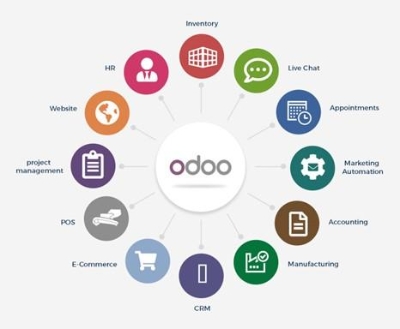
XRA says the project used Odoo modules for:
Maintenance
Inventory
Purchases
Employees
Surveys
The case study also states that the environment was deployed on Odoo.sh and customised to connect maintenance, purchasing, and inventory workflows for real-time spare-parts management. That integration matters because maintenance teams often lose time when parts usage, stock control, and replenishment requests are managed separately.
On XRA’s ERP services pages, the company also positions Odoo as a modular system that can be tailored to operational needs across manufacturing and other industries. In the manufacturing section, XRA specifically highlights machinery uptime and preventive maintenance as core use cases for Odoo’s MRP and maintenance-related capabilities.
How the rollout addressed practical constraints
Mobile logging solved a real access problem
A notable detail in the case study is that many staff members did not have access to computers. Rather than forcing a desktop-first process, XRA says it introduced mobile-friendly forms and digital checklists so maintenance activities could be logged directly from phones.
This is an important point for operational teams evaluating ERP projects. Adoption often fails when workflows assume ideal conditions that do not exist on the factory floor. In this case, the mobile-first approach appears to have been used to align the system with how staff actually worked.
Structured implementation reduced rollout complexity
According to XRA, the project followed a staged process that included:
discovery and mapping of maintenance activities,
identification and categorisation of assets,
preparation of technical specifications,
custom development,
training, user acceptance testing, and go-live support.
This staged model is consistent with how ERP projects are commonly stabilised in operational environments: document the real process first, then automate it selectively, then support adoption with training and testing.
What changed after implementation
XRA reports several outcomes from the rollout:
a significant reduction in downtime,
better visibility through dashboards and reporting,
faster maintenance cycles,
stronger consistency across teams,
improved spare-parts tracking,
and cost savings linked to fewer emergency repairs and unplanned purchases.
The case study attributes these gains to automated preventive maintenance schedules, standardised digital workflows, real-time maintenance logging, and tighter links between maintenance and stock control. It also states that the full solution was delivered in two months.
What other manufacturers can learn from this case
For companies reviewing their own maintenance processes, this example is useful because it frames ERP as an operational control tool rather than only an IT upgrade. The most relevant lessons are practical:
preventive maintenance needs enforceable scheduling, not just informal planning,
maintenance reporting is more valuable when linked to assets, downtime trends, and spare parts,
adoption improves when systems reflect the devices and working conditions teams already use,
and integration between maintenance, inventory, and purchasing can remove avoidable delays.
These points are especially relevant for multi-site manufacturers, where inconsistent processes between locations can make maintenance performance difficult to compare or improve.
Why this case matters in a broader ERP context
XRA’s broader services pages describe the company as an Odoo partner serving South African businesses with implementation, training, support, and optimisation services. Within that framework, this case study is a concrete example of how modular ERP tools can be applied to a specific operational problem: standardising maintenance across distributed manufacturing operations.
Readers who want to review the original case in context can refer to XRA’s article on maintenance and operations transformation with Odoo ERP, where the project scope, implementation steps, and reported outcomes are described in more detail.
Conclusion
This case is useful not because it promises dramatic transformation in abstract terms, but because it shows a recognisable operational issue and a structured response to it. A manufacturer with manual maintenance processes, limited visibility, and weak preventive scheduling introduced a connected Odoo setup that linked maintenance work, spare-parts control, approvals, and reporting. According to XRA’s published account, the outcome was lower downtime, faster cycles, and better operational control across sites.