CMS-Condition Monitoring Specialists - Products
Products
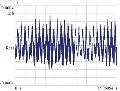
"On site solutions to machinery problems" Vibration Analysis involves the set-up at specific frequencies by the moving components of machines. From the energy measured at the specific frequencies and the vibration patterns set up by machines, Problems due to wear, misalignment, damaged bearings, coupling , gears etc. can be identified and related to the condition of specific components. Maintenance actions can then be focused on specific faults and damaged components. Techniques used by CMS is: a) Spectral Analysis b) Time Waveform Analysis c) Peak view Analysis d) Phase Analysis e) Transiet Data Analysis f) SST (Slow speed Technology) g) Resonant Testing h) Foundation Assesment I) Soft Foot Checks j) Specific Frequency Analysis k)Electric Motor Analysis l) Supply and installation of Online Vibration Systems.

Tests carried out on the oil samples include: A) Spectrometric Analysis B) Water Content C) Viscosity D) Oxidation E) Wear Debris Analysis F) Wear Particle count. On transformers oil analysis: 1) Moisture 2) Acidity 3) Dielectric (kv) 4) Dissolve gas analysis (DGA) 5) PCB with stickers 6) Furanics 7) Tan delta 8) Corrosive Sulphur
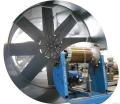
CMS provides cost- effective on-site balancing of rotating machinery in up to 16 planes. This is ideal for use on most types of rotating machines including pumps, fans, blowers, couplings etc.
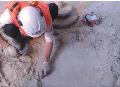
Ground Penetrating Radar are conducted on: A) Concrete evaluation to determine concrete deterioration, locates rebar and spacing there of, bar elevation and amount concrete cover over the rebar. B) Investigates thickness and internal structure of floors and walls C) Locates voids, cracks and delamination in concrete and masonry. D) Finds zones of water penetration and corrosion within defective concrete. E) Monitor the integrity of structures throughout their life cycle.
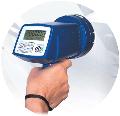
Strobe test can be conducted for example on the following to determine their condition. A) The condition of couplings B) The condition of belts on belt driven machines. C) Diagnostic inspection on base looseness of equipment. D) Condition of Gear teeth in mesh and displacement of lubrication. E) Stop action inspections e.g bent blades, shafts and condition of gear teeth.