Nanjing Xidiou Stainless Steel Co,.ltd - Products
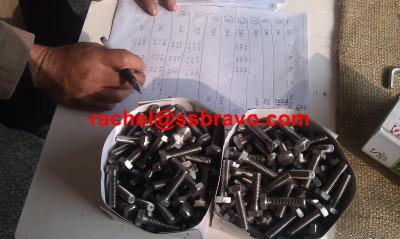
Nickle copper alloy M2.4360 hex head bolt cap screw
Send an e-mail enquiry to Nanjing Xidiou Stainless Steel Co,.ltd

0.1 ZAR
Material :
304 304L 347 316 316L 316Ti 317L 254SMO 654SMO AL6XN 310S 309S 2205 2507 321 S32760 Monel400 Monelk500 Inconel718 724L 725LN Hastelloy C276 C22 C4 GH2132 A286 316Ti Inconel625 Alloy59 Inconel600 Inconel925 Inconel825 GH3030 Alloy20 347 17-4PH Alloy800
Standards: GB ,ANSI/AMSE, DIN, JIS and BS,UNI etc
In stock items: 310S Hex nuts M6 - M20 AL6XN hex nut M6 904L Hex nuts M6 to M20, SAF2205 Hex nuts M6 to M20
Product Range:
Bolt, nut, washer, thread rod ,round bar,rivets and other fasteners and standard ,non standard stainless steel products.
Our Feature:
1.Fast Delivery
2.Factory sales
3.small order accepted (50 pieces)
4.mill test certifecate can be provided
Metric size: M6 to M100
Inch size : 1/4" to 2 1/2
Nut: M3-M64 (hexagonal, flange)
Threaded Rod:4-3000mm (all thread, double end thread)
Packing : Plywood case or wooden box
Payment:L/C T/T
Exported countries:Germany, UK, South Asia, Chile, Canada, Pakistan, South Korea,domestic market etc.
------------------------------------------------------------------------------------------------------------------------------------------------Contact:
Rachel Wang ; Mobile Phone: 0086-13357804480 ; skype: rachel13728; Email: [email protected]
Other common names: Alloy 400 Monel 400 is a nickel-copper alloy (about 67% Ni – 23% Cu) that is resistant to sea water and steam at high temperatures as well as to salt and caustic solutions. Alloy 400 is a solid solution alloy that can only be hardened by cold working. This nickel alloy exhibits characteristics like good corrosion resistance, good weldability and high strength. A low corrosion rate in rapidly flowing brackish or seawater combined with excellent resistance to stress-corrosion cracking in most freshwaters, and its resistance to a variety of corrosive conditions led to its wide use in marine applications and other non-oxidizing chloride solutions. This nickel alloy is particularly resistant to hydrochloric and hydrofluoric acids when they are de-aerated. As would be expecte